

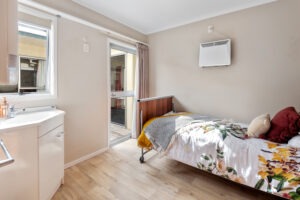
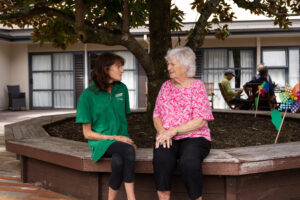
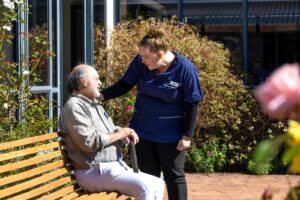
We're here to help you decide with confidence
Here you’ll find plain language, New Zealand specific guidance on Aged Care and Retirement Living.
1230
residents
1200+
team members
nationwide
10+ yrs
caring for New Zealanders
GETTING STARTED
Navigating the changes of moving into aged care.
We know it can feel daunting to know where to begin. These topics cover the questions almost every family asks first.
Step 1
Talk with your GP
Chat with your doctor; they are the best people to talk to about the journey ahead. They are a neutral person who knows you and your health.
Step 2
Complete a Needs Assessment
Your doctor provides a referral and a trained assessor will visit you in your home and help determine the care level required.
Step 3
Talk to WINZ
If you are assessed as requiring care, booking a time with WINZ is recommended. This can be time-consuming and complex, so it’s good to start as soon as possible.
Step 4
Choosing a home
Visit a few facilities to compare, ask about personalised care, how they communicate with family, and the costs associated with what’s on offer to find the best fit.
LEVELS OF CARE
Making sure you’re getting the help you need
There are a number of care levels that we can offer to our residents to make sure they are looked after in accordance with their medical, physical and psychological needs.
Rest Home Care
Allows some independence and privacy in home-like surroundings with care staff on duty at all times.
Hospital Level Care
For people who need nursing due to illness and/or disability. We provide 24/7 registered nurse cover as well as a team of caregivers.
Memory Care
Specialised dementia level care where residents receive security and comfort in our home-like surroundings.
Palliative Care
Our care team working with the local hospice who provide guidance and support for the best possible end of life care.
Respite Care
Provides temporary support for carers and enables them to take a break, while allowing the loved one a chance to join in on our activities.
Day Programme
For those not ready to move into a facility but who would benefit from some time out with caring people, and a day at our facility.
Assisted Living
For those who need a little extra assistance with day-to-day living but still want to maintain the independence of living on their own.
Independent Living
Live in a villa, apartment, or studio in one of our villages with the added peace of mind knowing help is at hand should it be needed.
Costs and Funding
Costs depend on each resident’s situation
Health NZ sets the amount charged for care at all levels, and the only part that differs from one operator to another is the Accommodation Premiums.
1
Fully Subsidised
Health NZ covers all costs if a resident qualifies for the Residential Care Subsidy.
2
Private Pay
All costs associated with care are privately funded by the resident/family.
3
Combination
Partial government funding with capped private contributions.
Work & Income New Zealand (WINZ) assesses eligibility and offers financial support options, like subsidies or loans. The application process can feel daunting and delves into every aspect of your finances, including assets, gifting and Trusts. The process can take some time, so it’s important to get your application underway as soon as possible. It must be completed no later than two weeks after a resident is admitted. Find out more information on their website.
Fully Subsidised
WINZ (Work & Income New Zealand) assess your wealth and agrees that Health NZ will pay for your care. The superannuation you receive each fortnight is used as part of that calculation. It uses your super to help cover the costs you paid for when you lived at home (like food, power, doctors, medication, etc). WINZ allows for a small amount (less than 10%) that you can keep for personal costs such as small gifts or haircuts.
Private Payers
Straight forward, you pay for all of the care, usually one month in advance.
Combination of Both
This is where it gets a little more complicated. Again, WINZ are the decision-makers here. Based on your financial ability to pay, they work out how much Health NZ will pay, and you are expected to cover the rest. Another little quirk to remember here is that you will not have to pay more than the Rest Home level of care. If you need Dementia or Hospital level of care, Health NZ covers the difference between Rest Home and the higher level of care. This outlines why you must have a Needs Assessment done before you are able to move into Aged Care.
TESTIMONIALS
Hear from our families
Don’t just take our word for it, hear from the families we care for.
“We have been incredibly impressed with
Aroha Rest Home. The entire team is
so friendly, caring, compassionate, and
attentive to all the residents. You can
genuinely see how much the staff care
about the residents they look after”
Jonathon
“He ain’t heavy he’s my brother! One does
what they can for their nearest and dearest. Rose Court staff from management to kitchen staff and cleaners, all have made the weight so much lighter. Thanks so very much.”
Jim
I have only positive comments about Rosedale. The staff are kind and welcoming, and the environment has a warm, homely feel. It is reassuring to know that Mum is so well looked after. ‘Peace of mind’ is the best way to describe our experience.
J Freyer
Resources
We’ve put together some helpful articles & guides
Our values
Here for you
At Alden, we exist to ensure that everyone, regardless of their means or background, has access to trusted and compassionate retirement living and aged care when they need it.
For our residents, that means always striving to be here for them and their whānau when they need us most.
For our team, that means being here for each other, to make everyone feel valued, supported and heard.
For our partners, it means being here to listen, understand and assist them in the work they do.
How can we help?
Send us an email or give us a call, we are here for you
Frequently Asked Questions
How can I find out if the home I choose meets Ministry of Health standards?
Every certified care home is audited by the Ministry of Health and full audits are undertaken on a regular basis. The reports are available online and can be downloaded. They give an overview of the rest home’s performance with coloured indicators showing how well the home performed against the different aspects of the Health and Disability Services Standards. View the reports online or visit the individual facility pages and click to view the PDF.
What do the different care levels mean?

There are a number of care levels that we can offer to our residents to make sure they are looked after in accordance with their medical, physical and psychological needs.
What does the term 'hospital level care' mean?
This is not the same as the generic term ‘hospital’ most picture when they hear this word, and associate it with drips, doctors, surgeons and theatres. Within an Aged Care setting hospital level care means 24 hour nursing care with Registered Nurses managing and monitoring health conditions and administering medications. Essentially, hospital level care is for residents whose needs go beyond what is offered in a less intensive rest home setting. It ensures those with significant health issues receive comprehensive medical and personal support.
Are residents entitled to funding or benefits?
Your local doctor will arrange for patients to be assessed for the level of care they require. At this stage, you will be given the necessary paperwork to complete and your local WINZ office will determine if you are entitled to benefits and/or subsidies. Read the Government web page for more information.